
'%3e%3cpath%20d='M53.8113%200.00142202C52.3491%200.00142202%203.44564%201.44588e-07%202.18783%201.44588e-07C2.18772%201.44588e-07%202.18794%201.44588e-07%202.18783%201.44588e-07C2.18761%201.44588e-07%202.18728%201.44588e-07%202.18695%201.44588e-07C0.970814%20-0.000437355%20-0.0169513%200.992031%200.000220555%202.21823V53.8112C0.000220555%2055.8526%202.54067%2056.7662%203.8511%2055.2318C12.4412%2045.1744%2025.3509%2039.8356%2038.5183%2040.8726C39.8638%2040.9771%2040.9771%2039.8497%2040.8722%2038.5186C39.8344%2025.3316%2045.1885%2012.4298%2055.232%203.85219C56.7721%202.53684%2055.8412%200.00153139%2053.8113%200.00142202ZM21.979%204.37544L32.496%204.37577C28.6308%209.53225%2026.0798%2015.6813%2025.1649%2022.072L17.7285%2014.6358C18.8587%2011.1091%2020.2841%207.66817%2021.979%204.37544ZM17.0975%204.37533C16.0419%206.59389%2015.0989%208.86856%2014.2763%2011.1837L7.46747%204.375L17.0975%204.37533ZM4.37522%207.46998L11.1826%2014.2773C8.86769%2015.0998%206.59335%2016.0426%204.37522%2017.0978V7.46998ZM4.37522%2021.9791C7.66719%2020.2848%2011.1079%2018.8595%2014.6348%2017.7291L22.0713%2025.1654C15.8645%2026.0539%209.6787%2028.5208%204.37533%2032.4958L4.37522%2021.9791ZM4.37522%2048.4047V38.1778C10.2698%2032.7584%2018.0901%2029.5193%2026.0898%2029.184L33.3221%2036.4161C22.8928%2036.8714%2012.6086%2040.8608%204.37522%2048.4047ZM36.4158%2033.3225L29.1833%2026.0903C29.5187%2018.0907%2032.7581%2010.2704%2038.178%204.37587L48.4048%204.3762C41.2771%2012.1545%2036.8979%2022.2755%2036.4158%2033.3225Z'%20fill='white'/%3e%3c/g%3e%3cdefs%3e%3cclipPath%20id='clip0_2655_4077'%3e%3crect%20width='56'%20height='56'%20fill='white'/%3e%3c/clipPath%3e%3c/defs%3e%3c/svg%3e)

Gatsby's last stable release was in February 2025. Nobody is really building it any more.
What happened
to Gatsby
Netlify bought Gatsby in February 2023. Within a few months most of the core team had left, and by that September Gatsby Cloud had been shut down, taking incremental builds with it, which was the feature most people were actually paying for. The last stable release was 5.16.1, in February 2025.
Nobody has officially said that Gatsby is finished, which is probably why most people haven't done anything about it. It still installs and it still builds, so there's never an obvious day when you have to act. The problem turns up later, when Node gets upgraded or a plugin stops working, and you find there's nobody left to fix it.


What staying on
Gatsby costs you
None of this breaks your site tomorrow, it just gets more expensive every year you leave it.

Nobody's shipping fixes
There's been no stable release since February 2025, so any bug you run into is one you either work around yourself or pay someone else to work around.

Every upgrade is a gamble
A new Node version, a new dependency or a security patch used to be routine, and on a framework nobody maintains any more each one of them can turn into a day of work that doesn't necessarily end well.

JavaScript nobody asked for
Gatsby loads the whole React runtime on every page, including the ones where nothing on the screen moves. Astro doesn't load any of it unless a component actually needs it, which your Core Web Vitals will notice.

Fewer and fewer developers
Nobody is starting new Gatsby projects, so finding someone willing to maintain an old one gets harder each year, and the ones who are willing tend to charge for the trouble.
What the port did
to this site
This site was Gatsby until August 2026, and the Gatsby build is still up, so you don't have to take any of this on trust. It's the same design and the same content on the same host, and the only difference between the two is the framework underneath.
Most performance numbers come out the same on both, or come down to bugs we fixed while porting. What's here is only the framework impact, which on a site this size is relatively small, but on a larger site would have been meaningful.
- It ships about a third of the JavaScript it used to and the browser spends about a quarter as long running it, which on cheap phones and slow connections is the difference between a page that answers a tap as soon as it looks ready and one that answers a beat later.
- Builds got quicker, and on this site that's a few seconds nobody notices, but it matters at size. Gatsby does more work per page than Astro, so with enough pages it's the difference between waiting for a deploy and not.
- It's quicker to work on now, which shows up in what changes cost rather than in anything a visitor sees. The dev server starts in under half the time, and Gatsby no longer forces us to go through a query language of its own to get content from the CMS.
If we do this properly, nobody visiting your site will have any idea it happened.
What stays
exactly the same
These are the parts we don't touch.
Your design
Your components and your styles come across as they are, and we go through the old site and the new one page by page, at every breakpoint, until they match. If you do want design changes while we're in there, that's a separate conversation and a separate quote.
Your interactive components
Astro runs React, so anything that needs to be interactive stays a React component and keeps working. What changes is that those parts load on their own, instead of the whole page shipping the React runtime in order to show static text.
Your content, and the CMS it lives in
Contentful, WordPress, Prismic, Strapi, Sanity, Storyblok, DatoCMS, or just Markdown files in the repo. Your content doesn't move and your editors carry on as they were. The only thing we replace is the Gatsby source plugin that sits in between.
Your URLs and your SEO
Every page keeps its address. We port the redirects, the canonical tags, the sitemap and the structured data, and check them all before switching anything over, so there shouldn't be anything for Google to relearn.
Your hosting
Astro builds to static files the same way Gatsby does, so wherever you deploy today you can carry on deploying there, on the same plan.
Your ability to change your mind
The Astro app gets built alongside the Gatsby one, in the same repo and on its own branch, so your live site stays untouched until you decide to switch. And if something surprises you afterwards, going back is one deploy.
From audit
to handover
Six stages, and you get a fixed quote before any code gets written.
Audit and scope
First we read your repo: how many pages and components there are, which plugins you depend on, what your gatsby-node.js is doing, what talks to your CMS, and how much of it is genuinely custom. You get back a written scope, a fixed price and the earliest we could start, and you decide after that whether to go ahead.
Scaffold
A new Astro app goes into your repo next to the Gatsby one, built from the same template every site we make starts from, and wired up to your CMS and your deployment so both can run side by side while we work.
Port
Components, styles, queries and pages move across, and most of that carries over without much trouble. The Gatsby-specific parts are the ones that take the time.
The GraphQL data layer doesn't get ported, it gets removed. We rewrite each query against your CMS's own API so it returns the shape your components already expect, and what costs time is the fields whose source isn't obvious: content Gatsby pulled from another document without being asked, or values a plugin made rather than your CMS. Nothing is written down, and when one goes missing nothing breaks, the page just renders it blank.
The image pipeline goes the same way, onto your CMS's CDN where it has one and Astro's own image handling where it doesn't, with srcset, sizes and reserved dimensions carried across so nothing shifts.
Parity check
We go through the new site against the old one, page by page and at every breakpoint, checking how it renders and behaves, along with forms, redirects and metadata. Anything that comes out different either gets fixed or gets flagged to you as deliberate.
Cutover
We switch the build over on a day that suits you, and the Gatsby app stays in the repo until you're comfortable, so going back is never more than one deploy away. For 90 days after that, anything the port got wrong we fix for free.
What we found
Porting a site means reading all of it, so we come out the other side knowing yours well. If we notice things worth improving along the way, we'll tell you. There's no obligation to do any of it, and if you decide you want to, that's a separate quote. On our own site the port turned up a layout shift bad enough to fail Core Web Vitals, which had been live for a while without anyone noticing.
Why bring
the port to us
We've done this before
We've ported Gatsby sites to Astro on client work and on our own, including the one you're reading right now, which is where the numbers further up came from. So you won't be the one we learn on.
AI does the boring half
Most of a port is repetitive work with a known right answer, so we automate a lot of it with Claude. That's the reason porting comes out cheaper than rebuilding, and cheaper than a couple more years of keeping Gatsby alive.
Fixed scope
The price comes out of the audit and it doesn't move afterwards. We're not going to get halfway through and decide that what your site really needed was a redesign. If we do end up thinking that, you'll hear it at the end, not in the middle.
We've written the process down
The port follows a playbook we've built up over several migrations: what order things move in, the traps that only show up after the framework swap, and the checks that have to pass before we cut over.
You end up on our template
The Astro app we build for you isn't a blank one, it's the same template every new site we make starts from. So the port arrives with our SEO setup, performance defaults, redirect handling and CMS patterns already in place, instead of being a straight translation of whatever Gatsby was doing.
Who you'd be
working with
A tight-knit team of spiders that's been stuck with each other for many years and can handle whatever flies their way.


Neuza Luís
Web DesignerSites we've spun
in Astro
SIMA






SIMA needed a website to match their new brand identity: elegant, minimal, and built to bring clarity to a complex specialty risk services portfolio.
Assador 29

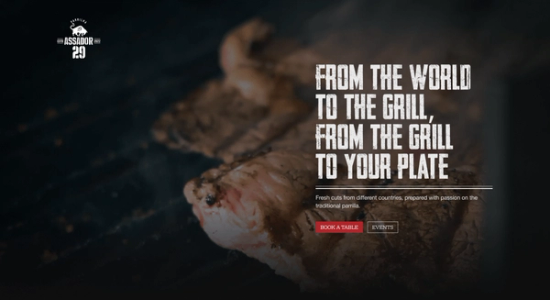


A website for a grill restaurant known for its meats from around the world, built to be as honest and direct as the place itself.
Summit Business School



Online business school website with Stripe payments, subtle animations, and flexible forms/landing pages creation. Used Astro to ensure great performance and ease of development.
Brendan Kane

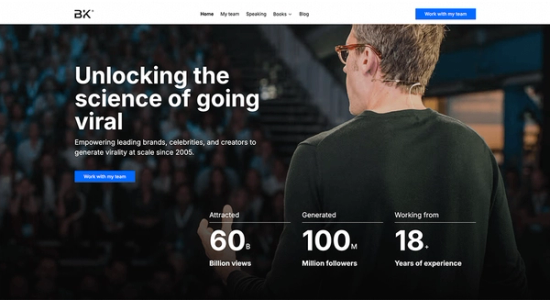
Astro website for Hook Point's CEO Brendan Kane. Re-used content from Hook Point's CMS on some pages for easier updates.
Dinner in the Sky

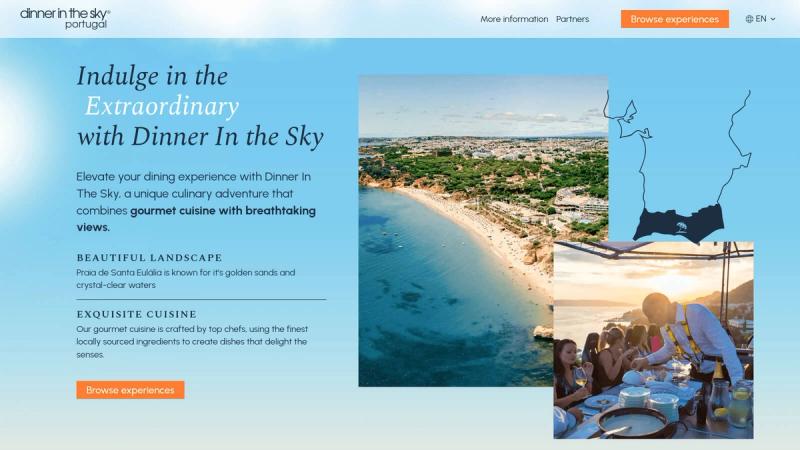
Website for premium dinner in the sky experiences. Day/night themes based on time of experiences. Ticketing integration.

What Our
Clients Say
 Review
"What we found most impressive was their ability to understand exactly what we were looking for, even though we didn’t have much technical knowledge at the beginning of the project."
Review“They’ve become our go-to team for all key web projects, from our main website to every landing page we create. I would highly recommend them to any business seeking reliable and top-tier web development services.”
 Review
"Not only did they provide an exceptional design, but they also completed it well ahead of the deadline. I’m extremely satisfied with the result."
Review“Always worked towards problem solving. Extremely accommodative and proactive! Was wonderful working with Francisco and team.”
Review“They were always happy to talk through ideas. Good value for money. Hit deadlines. Proactive improvement conversations and creative challenge.”
Review“Very good response, and they had a very good understanding of our needs and more than just delivering, questioning the why to ensure that final outcomes fits our needs.”
Got more questions?
How long does a port take?
It depends almost entirely on what's in your repo. A straightforward marketing site that stuck to Gatsby's normal patterns is usually one to two weeks from start to handover, which is elapsed time rather than hours of work. One with a lot of custom plugins, unusual data sourcing or heavy client-side code takes longer, and there's no way for us to know which of those yours is until we've read it. That's why the quote is free, and why it's fixed once we've given it.
What does a port cost?
It depends on the site and the real number comes out of the audit, but we can give you the shape of it. A single page site we'd expect to be somewhere around €300 to €500. A marketing site of ten to twenty pages, with nothing unusual in how it sources or renders its content, we'd expect between €800 and €1,500. Anything bigger or more complicated than that starts at around €2,500, and where it lands depends on what's in the repo. These are estimates based on the ports we've done, not a price list.
How much faster is Astro than Gatsby?
On our own site, ported with the design and content unchanged, the homepage went from downloading 172KB of JavaScript to 61KB, and from 532KB of it to parse to 175KB. The main thread is blocked for 40ms where it used to be 160ms. That's the framework doing less work on every page and every visit, and it matters more the more content you have, though not in the way build time does.
Gatsby ships the React runtime, its router and a data file for every page, whether or not anything on that page moves, so a long static article costs as much as an interactive page does. In Astro a page with nothing interactive on it ships no JavaScript. On a marketing site of a handful of pages that's a nice to have. On a blog with a few hundred posts, that's most of your pages with no JavaScript on them at all.
If someone quotes you a Lighthouse score for a port, ask them which metric moved and why. Ours moved, but not because of the framework. It moved because reading the whole site turned up a layout shift bad enough to fail Core Web Vitals, along with font and image problems we fixed on the way. Paint timings are mostly your images, your fonts and your host, and swapping the framework doesn't touch any of them.
What the framework changes is headroom. That saving is what a page costs before a single line of your own code runs, so the consent banner, the chat widget and the next two tracking scripts someone asks you for come out of a budget you still have rather than one you've spent. If speed on its own is what you're after, a port isn't the cheapest way to buy it. The reason to move is that nobody is fixing or improving Gatsby.
Will my search rankings drop?
Nobody can promise you a ranking, but if a port moves yours it should move up. Your URLs stay where they are, your content and metadata are identical (or better), and the pages still ship as static HTML like they did before. The thing that does change is how much JavaScript loads on top of that, and that moves in your favour.
Which CMS do you work with?
Sanity is our go-to and the one we know best, but the port doesn't depend on it. If Gatsby could source from it, Astro can fetch from it, usually with less machinery in between. Contentful, WordPress, Prismic, Strapi, Storyblok, DatoCMS, or Markdown in the repo all work fine. Your content stays where it is.
Why Astro and not Next.js?
It depends on what the site is, rather than on which of them is better. Astro is built for sites where the content is the product: marketing pages, blogs, documentation. It ships almost no JavaScript and hosts anywhere as static files. Next.js is built for sites that behave like applications, with accounts, dashboards, and data that changes while you're looking at it. It's very good at that, and it carries the weight to match.
Your Gatsby site is already the first kind: React components that build to static pages. Astro is that same shape with less machinery in the way, which is why the port is mostly mechanical. If yours is closer to an app than a website, we'll tell you at the audit, before you've paid for anything.
What stops Astro going the same way as Gatsby?
Cloudflare bought the Astro team in January 2026, which is close enough to Netlify buying Gatsby in 2023 that the question deserves an answer. What happened to Gatsby is that most of the core team had left within a few months and the releases stopped not long after. The Astro team went to Cloudflare and is still shipping, and Cloudflare has said publicly that Astro stays open source.
We can't see three years ahead any better than anyone else, but there's less to be stuck with either way. Astro has no GraphQL data layer and no plugin ecosystem holding your build together, so your components and your content aren't tied to it the way they were tied to Gatsby, and moving off it later would be a much smaller job than the one on this page.
Which sites is this a good fit for?
Any Gatsby version from v2 onwards, and any size, there's no minimum. What moves the price isn't the page count, it's how much your site does that Astro has no direct equivalent for. The usual one is a data layer that joins and reshapes your content before the components ever see it, since that has to be rewritten as ordinary code. Custom source plugins are another. So is interactivity that assumes the whole page is a single React tree, because in Astro the interactive parts are separate islands and anything shared between them has to be rewired. None of it stops a port, and you'll know which of it applies to you before you commit to anything.
Should we hire an agency for this, or do it ourselves?
You know your site better than we will, so if you've got a developer with a couple of clear weeks, doing it in-house is a reasonable call. What you'd be getting from us is the part that isn't in your repo: a process we've written down over several ports, covering the order things move in and the checks that have to pass before a cutover. You'd also end up on the Astro template every site we build starts from, with the SEO setup, performance defaults and redirect handling already in it, rather than on a straight translation of whatever Gatsby was doing.
And it doesn't have to be one or the other. We're happy to work alongside your team, take the parts they'd rather not do, and hand back something they can carry on with themselves.
What happens to my serverless functions and forms?
They come across. Serverless functions belong to your host rather than to Gatsby, so usually it's little more than a path change. Forms get ported and tested end to end during the parity check, submissions included.
Will my content editors need retraining?
No, nothing they see changes.
What if something breaks after you hand it over?
You get 90 days of free support after the cutover, the same as on the sites we build from scratch. If the port got something wrong, we fix it and it doesn't cost you. Things that were already broken on the Gatsby site, and anything new you want adding, are a separate quote.
Where are you based?
We're a small web agency in Lisbon, on Western European time. Our clients run from Australia to California and it hasn't caused problems, mostly because a port doesn't take much of your time: we read the repo, we ask a handful of questions, and the next thing you need to look at is the finished site. When we do need a call we'll find an hour that works for both of us.
Let's quote
your port
Send us a link to your repo, read access is all we need, and we'll come back with a scope and a fixed price. If you'd rather not hand over the code before we've spoken, send the address of your site instead and we'll give you an estimate to start from.